Choosing the right e-commerce platform is one of the biggest decisions for any online business. Whether you’re launching a new store or planning to migrate from an existing platform, your choice directly impacts performance, scalability, SEO, customer experience, and long-term growth.
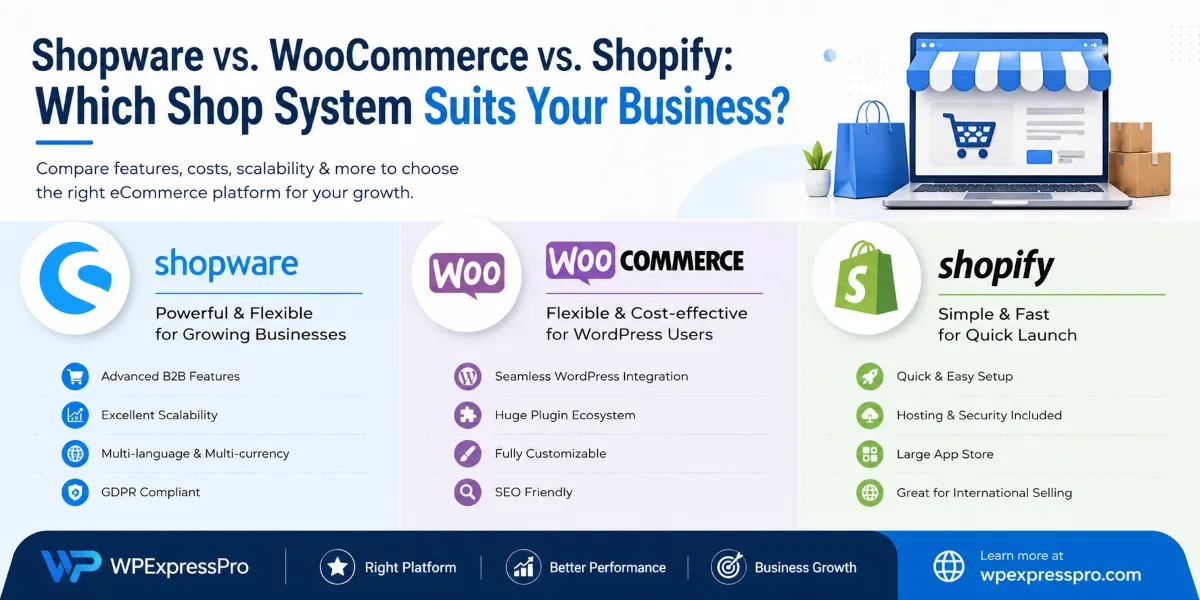
Among the most popular solutions today, Shopware, WooCommerce, and Shopify each offer unique strengths for different business models.
At WPExpressPro, we work with businesses of all sizes to build scalable and conversion-focused online stores. In this guide, we’ll break down the differences between Shopware, WooCommerce, and Shopify in a practical, easy-to-understand way — so you can choose the platform that truly matches your goals.
Quick Comparison: Shopware vs. WooCommerce vs. Shopify
| Feature | WooCommerce | Shopware | Shopify |
|---|---|---|---|
| Platform Type | WordPress Plugin | Dedicated E-Commerce Platform | Hosted SaaS Platform |
| Best For | Small to Medium Businesses | Growing Businesses & B2B | Fast Launch & D2C Brands |
| Hosting | Self-Hosted | Self/Managed Hosting | Included |
| Initial Cost | Low | Medium to High | Monthly Subscription |
| Ease of Use | Moderate | Advanced | Very Easy |
| SEO Flexibility | Excellent | Very Good | Good |
| Customization | Extremely Flexible | Highly Flexible | Limited Compared to Others |
| B2B Features | Plugin-Based | Strong Native Features | Limited |
| Scalability | Moderate to High | Enterprise-Level | High |
| Maintenance | User Managed | User/Agency Managed | Shopify Handles Everything |
| Ideal For | Content-Driven Stores | Complex E-Commerce Operations | Quick Global Selling |
WooCommerce: Best for Flexibility and WordPress Users
WooCommerce is one of the most popular e-commerce solutions in the world because it integrates directly with WordPress. If your business already runs on WordPress, WooCommerce feels like a natural extension.
It gives businesses complete control over design, SEO, and functionality while keeping costs relatively low.
Why Businesses Choose WooCommerce
- Easy integration with WordPress websites
- Excellent SEO capabilities
- Huge plugin ecosystem
- Fully customizable design and functionality
- Lower startup costs
- Ideal for content marketing and blogging
Challenges with WooCommerce
- Requires hosting and technical maintenance
- Performance optimization becomes important for large stores
- Plugin conflicts can happen
- Advanced B2B features often require premium extensions
WooCommerce Is Best For
- Small to medium-sized businesses
- Businesses already using WordPress
- SEO-focused websites
- Content-heavy e-commerce stores
- Companies wanting full control over customization
At WPExpressPro, WooCommerce is often our top recommendation for businesses that need flexibility, strong SEO, and complete ownership of their online store.
Shopware: Built for Scalable and Complex E-Commerce
Shopware is a powerful platform designed for growing businesses with advanced requirements. It’s especially strong in B2B commerce, multilingual selling, and large product catalogs.
Unlike WooCommerce, Shopware is built specifically for e-commerce from the ground up, making it more suitable for businesses with complex workflows and long-term scaling plans.
Why Businesses Choose Shopware
- Strong native B2B functionality
- Excellent scalability
- Advanced product and customer management
- API-first architecture for headless commerce
- Strong multi-store and multi-language support
- Great for enterprise-level customization
Challenges with Shopware
- Higher development and setup costs
- Requires technical expertise
- Smaller plugin ecosystem compared to WordPress
- More suitable for businesses with dedicated budgets
Shopware Is Best For
- Medium to large businesses
- B2B companies
- Multi-country online stores
- Businesses expecting rapid growth
- Complex e-commerce operations
If your business needs enterprise-level scalability and advanced workflows, WPExpressPro can help you plan and implement a scalable Shopware solution tailored to your operations.
Shopify: The Fastest Way to Launch an Online Store
Shopify is known for simplicity. Since it’s a fully hosted solution, businesses don’t have to worry about servers, updates, security patches, or technical maintenance.
Everything is managed by Shopify, making it one of the easiest platforms for launching a store quickly.
Why Businesses Choose Shopify
- Extremely beginner-friendly
- Fast setup and deployment
- Hosting and security included
- Large app marketplace
- Excellent for social commerce
- Easy international selling
Challenges with Shopify
- Monthly subscription costs
- Transaction fees in some cases
- Limited backend flexibility
- Customization restrictions compared to WooCommerce or Shopware
- Advanced features often require apps
Shopify Is Best For
- Startups and new brands
- D2C businesses
- Businesses wanting minimal technical involvement
- Fast product launches
- International online selling
For brands that prioritize speed and ease of use, WPExpressPro helps build optimized Shopify stores focused on conversions and growth.
Which Platform Should You Choose?
Here’s a simplified recommendation based on common business needs:
| Your Business Requirement | Recommended Platform |
|---|---|
| Already using WordPress | WooCommerce |
| Need affordable setup | WooCommerce |
| Need advanced B2B features | Shopware |
| Planning large-scale growth | Shopware |
| Want fastest launch | Shopify |
| Prefer low maintenance | Shopify |
| Need maximum customization | WooCommerce |
| Selling internationally | Shopify or Shopware |
| Need enterprise scalability | Shopware |
What About SEO?
For businesses focused heavily on organic traffic and Google rankings, SEO flexibility matters.
- WooCommerce offers the strongest SEO control because of WordPress.
- Shopware also provides strong SEO capabilities for large stores.
- Shopify performs well but has some structural SEO limitations compared to WooCommerce.
If SEO and content marketing are central to your growth strategy, WooCommerce is often the strongest choice.
Migration: When Should You Switch Platforms?
Many businesses eventually outgrow their current platform. Common migration scenarios include:
- WooCommerce to Shopware for better scalability
- Shopify to WooCommerce for more flexibility
- Shopify to Shopware for advanced B2B needs
- WooCommerce to Shopify for easier management
- Legacy platforms moving to modern commerce systems
A successful migration requires careful planning to avoid SEO losses, downtime, and data issues.
At WPExpressPro, we help businesses migrate stores safely while preserving SEO rankings, customer data, and store performance.
Final Thoughts
There’s no universal “best” e-commerce platform. The right solution depends on your business model, budget, technical requirements, growth plans, and long-term strategy.
- Choose WooCommerce if you want flexibility, SEO power, and full control.
- Choose Shopware if you need scalability and advanced business features.
- Choose Shopify if you want a simple, fast, and low-maintenance solution.
If you’re unsure which platform fits your business best, WPExpressPro can help you evaluate your requirements and choose the right e-commerce solution for sustainable growth.